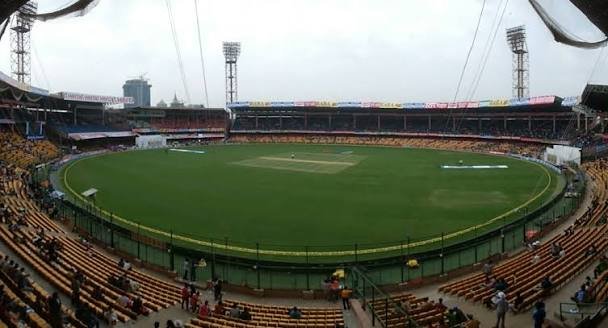
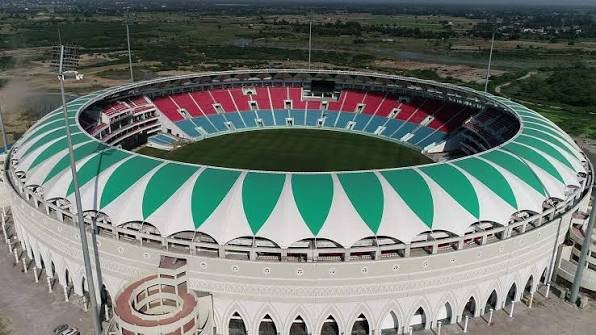
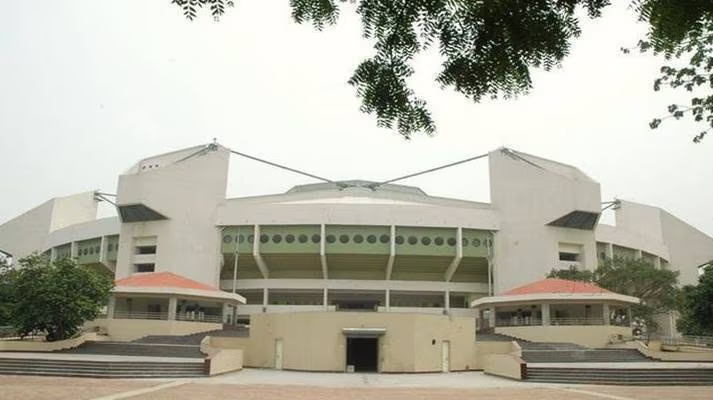
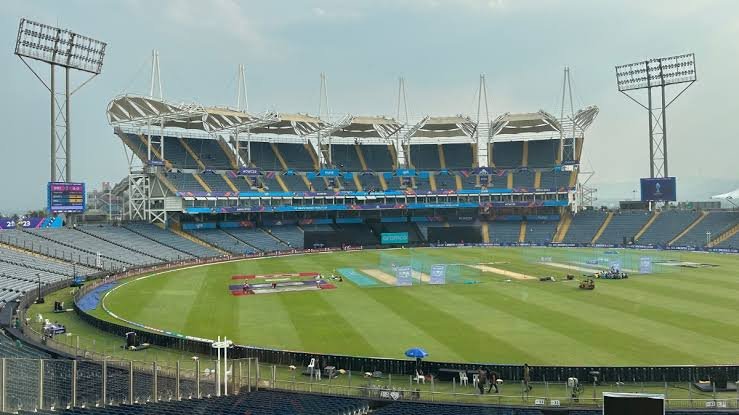
Gahunje Stadium, officially the Maharashtra Cricket Association Stadium, sits along the Mumbai-Pune Expressway with the Sahyadri hills forming a genuinely striking backdrop to the playing field. Opened in 2012, this venue replaced Pune’s old Nehru Stadium after a ticketing dispute forced an international India-Sri Lanka match to relocate to Kolkata — an embarrassment that pushed the Maharashtra Cricket Association to build something bigger and better on the city’s outskirts. Here’s a complete look at where it stands, how big it is, and what it offers today.
| Quick Facts | Details |
| Full name | Maharashtra Cricket Association Stadium |
| Also known as | Gahunje Stadium, MCA Stadium |
| Location | Gahunje village, near Pune, Maharashtra |
| Opened | 2012 |
| Seating capacity | Approx. 37,000–42,700 (sources vary) |
| Owner/Operator | Maharashtra Cricket Association |
| Architect | Michael Hopkins, Hopkins Architects |
| Home team | Maharashtra cricket team |
| Ends | Pavilion End, Hill End |
| Pitch surface | Black soil, generally batting-friendly |
| Parking | Approx. 4,000 cars, 10,000 two-wheelers |
Where Is Gahunje Stadium Located?
The stadium sits in Gahunje village, technically outside Pune’s core city limits, positioned right along the Mumbai-Pune Expressway. That location was a deliberate choice — rather than squeezing a modern international venue into Pune’s crowded urban core, the Maharashtra Cricket Association opted for open land near the expressway, giving the stadium room to expand and easy connectivity for fans travelling from both Pune and Mumbai.
Reaching the ground works reasonably well given its expressway positioning:
- By road: Direct access via the Mumbai-Pune Expressway makes the stadium convenient for fans travelling between India’s two biggest western metros, not just local Pune residents.
- By rail: Pune Railway Station serves as the main hub, with taxis, auto-rickshaws, and city buses covering the remaining distance to Gahunje.
- Local transport: Google Maps and other navigation apps are commonly used by match-goers, since the stadium’s location outside the main city means route familiarity isn’t automatic for every visitor.
How Many Spectators Can It Hold?
Here’s where things get genuinely inconsistent across sources — reported capacity figures for Gahunje Stadium range anywhere from 34,000 to 45,000, with 37,000 and 42,700 being the two most commonly cited numbers. This kind of discrepancy isn’t unusual for Indian stadiums that have undergone phased construction or seating reconfiguration since opening, and it’s worth flagging rather than presenting one figure as definitive.
A few things worth understanding about its scale:
- The stadium’s final phase of construction was, for some years, still incomplete even after it began hosting major matches, which may partly explain the shifting capacity figures across different reporting periods.
- It’s designed in a deep bowl shape, a layout choice that keeps spectators close to the field regardless of capacity configuration.
- The straight boundary measures 74 metres, a genuinely long distance that makes clearing the ropes down the ground a real challenge for batters, even on a surface that otherwise favours batting.
Facilities Inside the Stadium
Gahunje Stadium was designed by British architect Michael Hopkins with a clear ambition: build a venue that could stand among India’s premier cricket grounds from day one.
For players and teams:
- An advanced indoor cricket academy with residential accommodation, supporting youth training programs
- Player facilities built to standards suitable for Test cricket, ODIs, and T20 internationals
- Two clearly defined ends — Pavilion End and Hill End — each offering distinct playing conditions
For spectators and corporate guests:
- 80 corporate hospitality boxes for premium match-day experiences
- Extensive parking capacity, accommodating roughly 4,000 cars and 10,000 two-wheelers
- A design that keeps the mountain backdrop visible from most seating areas, adding genuine visual character to the matchday experience
Broader infrastructure:
- Facilities supporting large-scale broadcast operations for international and IPL fixtures
- Modern amenities built to accommodate the demands of hosting World Cup matches and bilateral international series
What Makes the Pitch and Ground Distinctive?
The playing surface at Gahunje is made of black soil, a composition that typically produces a batting-friendly pitch, especially as matches progress. Historical trends at the venue show teams batting first have generally had the upper hand, with successful run chases proving somewhat harder to execute under the pressure of a significant target. That said, the notably long straight boundary at 74 metres tempers total run-scoring somewhat, rewarding calculated placement over pure power hitting down the ground.
A Stadium Built From a Ticketing Dispute
The origin story here is genuinely worth knowing. Before Gahunje existed, Maharashtra Cricket Association’s home matches were played at Nehru Stadium in downtown Pune. In 2007, a dispute between the state association and Pune Municipal Corporation over ticket allocation led to an India-Sri Lanka international being relocated to Kolkata at short notice — a significant blow to Pune’s cricketing reputation. That episode directly triggered the decision to build a new, independently controlled venue, and construction on what would become Gahunje Stadium began soon after.
Matches and Cricketing History
Since opening in 2012, the stadium has built a genuinely impressive résumé. It hosted its first Test in February 2017 between India and Australia, followed by its most recent Test in October 2024 against New Zealand. On the white-ball side, it staged its first ODI in October 2013, another India-Australia fixture, and has continued hosting international matches regularly since. The ground has also featured prominently in IPL history, serving as home turf for Pune Warriors India, Kings XI Punjab, Rising Pune Supergiant, and even hosting Chennai Super Kings matches during part of the 2018 season. It was also selected as one of the venues for the 2023 ICC Men’s Cricket World Cup.
FAQs
Q1. Why does Gahunje Stadium’s capacity figure vary across different sources?
Reported figures range from 34,000 to 45,000 due to phased construction and seating changes over the years, with 37,000 and 42,700 being the most commonly cited numbers.
Q2. Why was Gahunje Stadium built instead of continuing to use Nehru Stadium in Pune?
A 2007 ticketing dispute between Maharashtra Cricket Association and Pune Municipal Corporation led to an international match relocating away from Pune, prompting the association to build an independent venue.
Q3. Which IPL teams have called Gahunje Stadium home?
Pune Warriors India, Kings XI Punjab, and Rising Pune Supergiant have used it as their home ground, and Chennai Super Kings also played matches here during 2018.
Q4. Is the pitch at Gahunje Stadium good for batting or bowling?
It generally favours batting due to its black soil composition, though the 74-metre straight boundary makes clearing the ground a genuine challenge for batters.