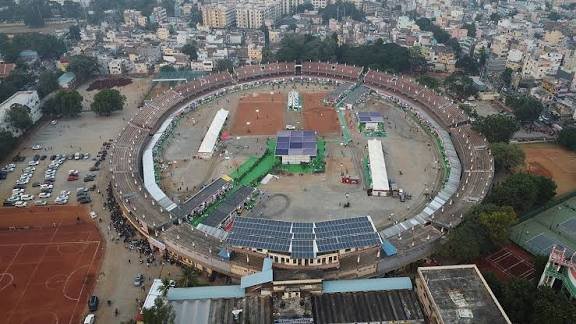
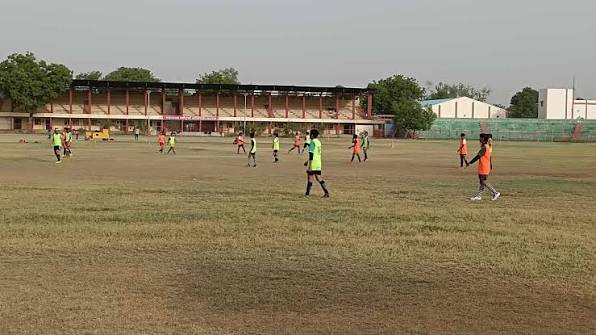
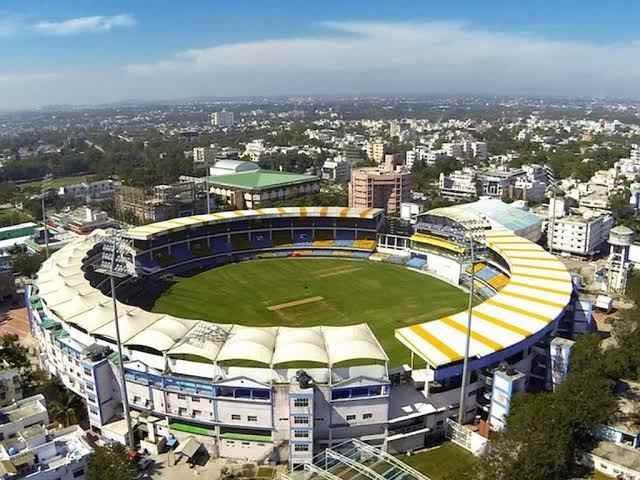
Gitanjali Stadium Kolkata takes its name from Rabindranath Tagore’s Nobel Prize-winning poetry collection, a fitting tribute given its location in Kasba, a neighbourhood with deep ties to Bengal’s cultural history. Unlike the city’s giant venues — Eden Gardens with its 68,000 seats, or Salt Lake Stadium’s 85,000 capacity — this ground occupies genuinely modest territory, seating around 4,000 people and functioning primarily as a community sporting facility for local cricket and neighbourhood recreation.
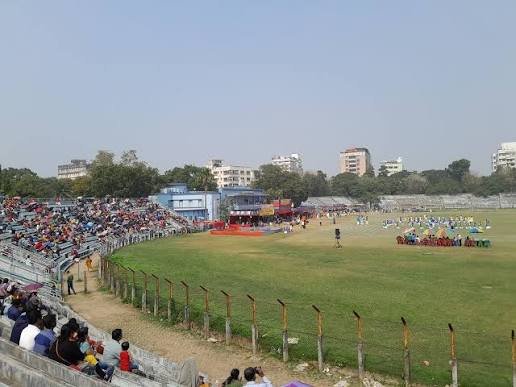
| Detail | Information |
| Location | Kasba, Kolkata, West Bengal |
| Track length | 57.5 metres |
| Seating capacity | Approximately 4,000 |
| Primary use | Cricket, community sports |
| Additional facilities | Indoor games area, gymnasium |
| Category | Community/neighbourhood sports complex |
| Nearby attractions | Acropolis Mall, Tagore House, Maya Art Space |
Where Gitanjali Stadium Sits Within Kolkata
Kasba, the neighbourhood housing this stadium, sits in a genuinely central part of Kolkata, close enough to major landmarks like Acropolis Mall and the historic Tagore House that visitors often combine a stadium visit with broader sightseeing across the area. This is a residential, well-established part of the city rather than an outlying development, giving the ground natural integration into daily neighbourhood life.
Getting there works reasonably well given Kasba’s connected position:
- Local buses and app-based cabs regularly serve the Kasba area, keeping the ground accessible without requiring specialised transport.
- The neighbourhood’s proximity to Kolkata’s cultural landmarks, including Tagore House, makes combining a visit here with other sightseeing genuinely convenient.
- Being centrally located within Greater Kolkata keeps travel time manageable for residents across the city’s southern and eastern zones.
Understanding the Stadium’s Modest Scale
At approximately 4,000 seats, Gitanjali Stadium sits at a genuinely different tier compared to Kolkata’s marquee venues. Where Eden Gardens holds 68,000 and Salt Lake Stadium accommodates 85,000, this ground was never built to compete on scale — its purpose lies entirely in serving local cricket and community recreation rather than hosting major spectator events.
A few honest points worth understanding here:
- The stadium’s 57.5-metre running track length reflects its function as a genuinely local training and recreation facility, distinct from Kolkata’s larger competition venues.
- Visitor reviews consistently note that the ground is primarily used by locals, with limited additional facilities beyond the core sporting infrastructure.
- Despite its modest scale, the stadium fills a genuine gap in Kasba’s neighbourhood sporting infrastructure, giving local cricket enthusiasts a dedicated space without needing to travel to the city’s larger, more distant venues.
What the Ground Currently Offers
Gitanjali Stadium’s facility list is intentionally compact, matching its role as a community-scale venue rather than an international competition ground.
- A cricket-focused playing area supporting regular local matches and practice sessions
- A separate area designated for indoor games, adding variety beyond outdoor cricket
- A gymnasium available for community fitness use alongside sporting activities
- Basic spectator seating accommodating up to 4,000 people for local matches
- A straightforward, low-frills layout suited to grassroots and recreational sporting activity
A Genuine Community Sporting Hub
What defines Gitanjali Stadium isn’t grandeur — it’s function. Reviewers consistently describe the venue as a place where locals gather to watch or play cricket, without the elaborate hospitality boxes, premium seating tiers, or broadcast infrastructure found at Kolkata’s bigger grounds. That simplicity is precisely the point: not every neighbourhood in a cricket-obsessed city needs a stadium built for international fixtures, and Gitanjali Stadium fills the more modest, equally important role of keeping cricket genuinely accessible at the community level.
How Gitanjali Fits Kolkata’s Broader Sporting Landscape
Kolkata’s stadium ecosystem spans a genuinely wide range of scales, and Gitanjali Stadium occupies its own distinct niche within that landscape. Eden Gardens dominates the conversation as India’s oldest and among its largest cricket grounds, while Salt Lake Stadium (Vivekananda Yuba Bharati Krirangan) anchors the city’s football scene with an 85,000 capacity. Mid-tier venues like Kishore Bharati Krirangan (12,000) and Rabindra Sarobar Stadium (22,000) handle regular club-level football fixtures for teams like Mohammedan SC. Gitanjali Stadium sits well below all of these in scale, functioning instead as exactly the kind of neighbourhood ground that keeps grassroots cricket alive in a city where the sport runs through nearly every lane and alley.
Cultural Context Behind the Name
Naming the stadium after Tagore’s “Gitanjali” — the poetry collection that earned him the Nobel Prize in Literature in 1913 — reflects Kolkata’s broader tendency to weave its cultural icons into civic and sporting infrastructure. The choice connects a simple neighbourhood sports facility to one of Bengal’s most celebrated literary achievements, giving even a modest community ground a small thread of the city’s deep cultural identity.
FAQs
Q1. Is Gitanjali Stadium suitable for hosting large cricket tournaments?
No, with a capacity of around 4,000, it functions primarily as a community and local cricket venue rather than a large-scale competitive tournament ground.
Q2. What facilities besides cricket does Gitanjali Stadium offer?
The venue includes a separate indoor games area and a gymnasium, alongside its main cricket-focused outdoor space, supporting broader community fitness activities.
Q3. How does Gitanjali Stadium compare to Eden Gardens in scale?
It’s dramatically smaller, seating around 4,000 compared to Eden Gardens’ 68,000, reflecting its role as a neighbourhood facility rather than an international cricket venue.
Q4. Where is Gitanjali Stadium located in Kolkata?
It’s situated in Kasba, a well-established Kolkata neighbourhood close to landmarks like Acropolis Mall and Tagore House, keeping it centrally accessible.