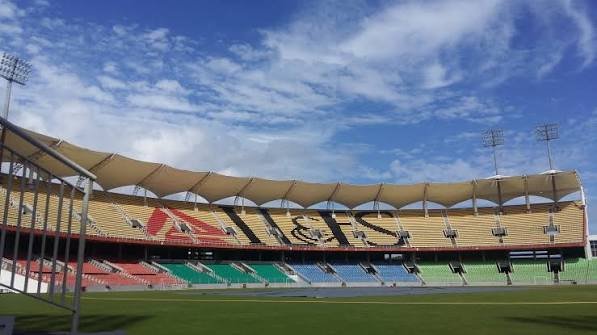
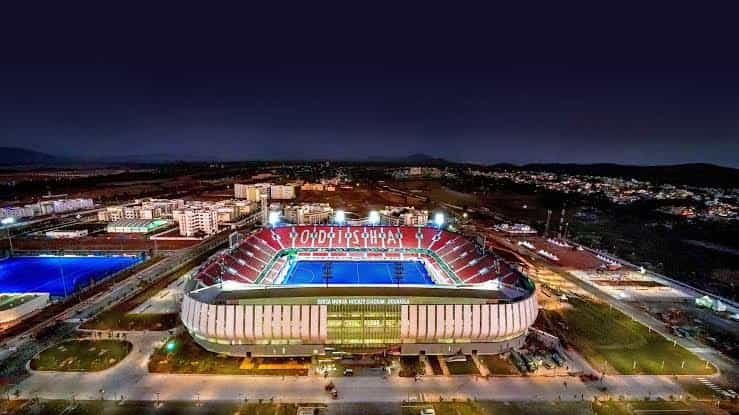
Guru Nanak Stadium in Ludhiana holds a genuinely rare distinction for an Indian sporting venue — it opened and closed the 2001 National Games, hosted Kabaddi World Cup fixtures, and today serves as home ground for Punjab FC in the Indian Super League, all without ever functioning as a cricket venue. Named after the founder of Sikhism, this Punjab landmark has spent over two decades adapting to whatever sport the moment demanded. Here’s a complete look at its location, scale, and facilities.

| Quick Facts | Details |
| Name | Guru Nanak Stadium |
| Location | Club Road, Civil Lines, Ludhiana, Punjab |
| Owner | Punjab FC |
| Seating capacity | 15,000–30,000 (sources vary) |
| Playing surface | Bermuda grass |
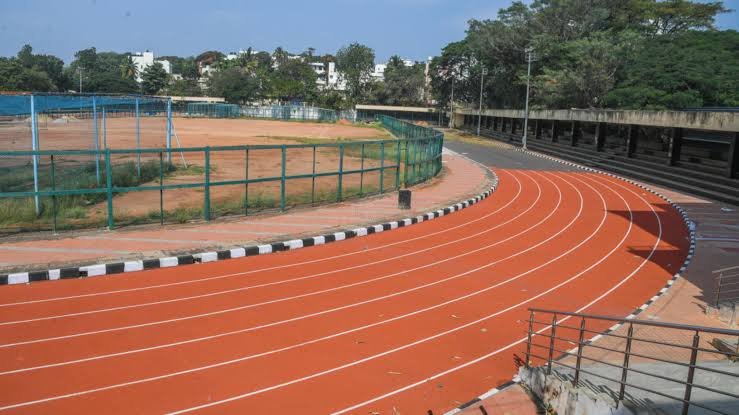
| Track | 8-lane synthetic track with 2-lane warm-up track |
| Home team | Punjab FC (Indian Super League) |
| Major event hosted | 2001 National Games, Kabaddi World Cup |
| Renovated | 2025 |
Where Is Guru Nanak Stadium Located?
The stadium sits on Club Road in the Civil Lines area of Ludhiana, near Rakh Bagh and close to the city’s railway station. This is genuinely central real estate — Ludhiana’s Civil Lines locality has long been the administrative and civic heart of the city, and having a major sporting venue positioned here keeps it well within reach of most residents.
Getting there works well given its proximity to key transit points:
- By rail: The stadium’s location near Ludhiana railway station makes it one of the more accessible major sporting venues in Punjab for visitors arriving by train.
- By road: Club Road connects smoothly to the wider Civil Lines and Gandhi Nagar areas, keeping local access straightforward for match-day crowds.
- Within the city: Being centrally located means autos, cabs, and city buses all serve the area regularly, without requiring specialised transport arrangements.
How Many Spectators Can It Hold?
Reported capacity figures for Guru Nanak Stadium vary noticeably across sources — some list it at 15,000, while more recent listings cite 30,000. This kind of discrepancy typically reflects renovation history, and given the stadium’s 2025 renovation, the higher figure likely represents its current, upgraded capacity following that work.
A few things worth understanding about its scale:
- The stadium hosted the opening and closing ceremonies of the 2001 National Games of India, an event that would have required substantial spectator capacity to manage successfully.
- Its 8-lane synthetic athletics track, built to international standards, reflects genuine investment in the venue’s multi-sport credentials beyond just football seating.
- Access to training facilities here is notably restrictive — only national and international-level players are permitted to practice on-site, distinguishing it from more open community sports grounds.
Facilities Inside the Stadium
Guru Nanak Stadium offers a genuinely comprehensive range of infrastructure, reflecting its role as one of Punjab’s primary multi-sport venues.
Athletics and training infrastructure:
- An 8-lane synthetic track meeting international competition standards
- A dedicated two-lane warm-up track for athletes preparing before events
- Facilities supporting a remarkably wide range of disciplines, including badminton, boxing, cycling, gymnastics, handball, judo, shooting, and wrestling
For players and officials:
- Modern dressing rooms suited to competitive football and athletics events
- Administration and media rooms supporting organised tournament coverage
- A VIP guest lounge for dignitaries and high-profile visitors
For spectators and general use:
- Floodlights enabling evening matches and events
- Conference and meeting spaces available for events beyond sport
- Air-conditioned changing rooms, first aid facilities, and wheelchair accessibility
Why Isn’t This a Cricket Venue?
This is worth addressing directly, since the stadium’s naming and prominence sometimes lead people to assume otherwise. Guru Nanak Stadium is explicitly not suited for cricket — its design, dimensions, and infrastructure were built around football, athletics, and multi-discipline sporting events rather than a cricket pitch and boundary layout. Fans specifically looking for cricket venues in Ludhiana would need to look elsewhere in the city or state.
A Stadium Built for Adaptability
What makes Guru Nanak Stadium genuinely distinctive is how many different sporting worlds it has moved between over the decades. It has hosted domestic kabaddi matches alongside international Kabaddi World Cup fixtures, including a notable Canada versus Italy third-place playoff in April 2010. Its adjacent indoor stadium has staged the National Basketball Championship, adding yet another discipline to its résumé. On the football side, it served as home ground for JCT FC during their I-League era and now hosts Punjab FC’s Indian Super League matches, alongside youth academy fixtures for Minerva Academy FC.
That range — kabaddi, basketball, football, athletics, and civic ceremonies — reflects a deliberate design philosophy rather than accidental versatility. Few Indian stadiums are genuinely built to pivot this smoothly between such different sporting formats.
Named After a Figure of Deep Significance
The stadium’s name honours Guru Nanak, the founder of Sikhism, reflecting Punjab’s deep cultural and religious identity. Naming major civic sporting infrastructure after Guru Nanak is a meaningful gesture in a state where Sikh heritage runs through nearly every dimension of public life, giving the venue a layer of cultural resonance well beyond its role as a sports facility.
Recent Developments and Football’s Growing Role
The stadium’s 2025 renovation signals a clear shift toward strengthening its football credentials, particularly given Punjab FC’s use of the ground as an ISL home venue. This kind of investment reflects broader momentum behind football in Punjab, a state historically more associated with kabaddi and athletics than the round-ball game. As Punjab FC continues establishing itself in India’s top football tier, Guru Nanak Stadium’s role as a genuine ISL-standard venue is likely to keep growing in importance.
FAQs
Q1. Can Guru Nanak Stadium host cricket matches?
No, the stadium isn’t suited for cricket. It’s built primarily for football, athletics, and multi-sport events, not cricket pitches or boundaries.
Q2. Which football club currently uses Guru Nanak Stadium as its home ground?
Punjab FC, an Indian Super League team, uses the stadium as one of its home venues, along with its youth academy squad.
Q3. Why do capacity figures for this stadium differ across sources?
Capacity listings range from 15,000 to 30,000, likely reflecting changes following the stadium’s 2025 renovation, which appears to have expanded its seating.
Q4. What sports besides football can be played at Guru Nanak Stadium?
The venue supports athletics, basketball, kabaddi, badminton, boxing, cycling, gymnastics, handball, judo, and several other disciplines across its facilities.