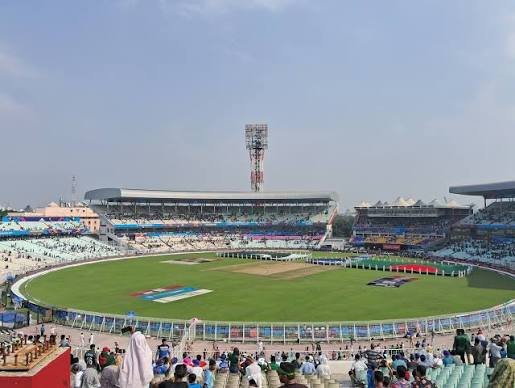
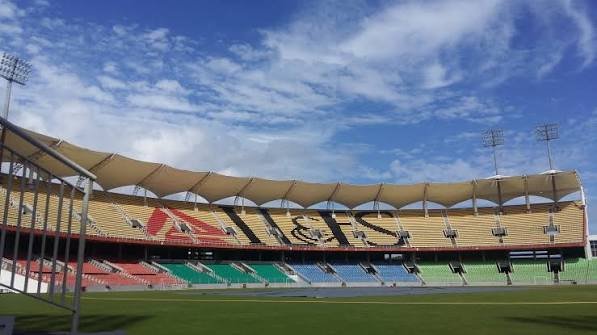
Balewadi Stadium Pune once welcomed 20,000 fans through its gates before safety recalibrations trimmed that number down over the years — a capacity shift that tells you something about how this venue has evolved since it first opened for the 1994 National Games. Officially the Shree Shiv Chhatrapati Sports Complex, named after Maratha warrior king Shivaji Maharaj, this sprawling multi-sport campus has since hosted the 2008 Commonwealth Youth Games, AFC Women’s Asian Cup fixtures, and become home turf for Pro Kabaddi League side Puneri Paltan.
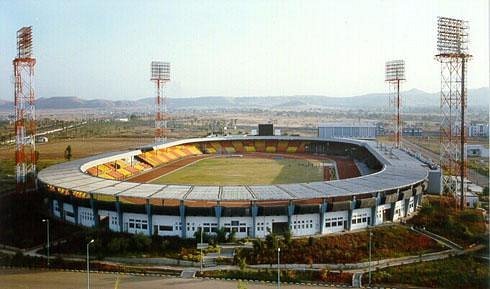
Balewadi Stadium Overview
| Detail | Information |
| Official name | Shree Shiv Chhatrapati Sports Complex |
| Location | Mahalunge, Balewadi, Pune, Maharashtra |
| Built | 1992-1994, for the 1994 National Games |
| Operator | Government of Maharashtra |
| Main stadium capacity | 11,900 (originally up to 20,000) |
| Athletics track | 400m, international standard |
| Distance from downtown Pune | Approx. 15 km |
| Home team | Puneri Paltan (Pro Kabaddi League, since 2014) |
| Notable events | 2008 Commonwealth Youth Games, Khelo India Youth Games 2019, AFC Women’s Asian Cup |
Getting to the Complex
Balewadi sits roughly 15 km from central Pune and about 5 km from Hinjawadi, placing it conveniently close to the city’s IT corridor while remaining accessible from older parts of Pune too. The address itself, Baner-Mahalunge Road near National Games Park, reflects the complex’s origin as purpose-built infrastructure for a specific national sporting event rather than an organic city-centre venue.
Practical access points include:
- By road: Baner Road and the Mahalunge stretch connect the complex to Pune’s arterial network, with the Hinjawadi IT hub just a short drive away for corporate visitors.
- Local transport: Autos, cabs, and app-based rides serve the area regularly, given its proximity to Pune’s fast-growing western suburbs.
- Nearby stays: Several hotels in the Baner and Aundh areas cater to visitors attending multi-day tournaments or events at the complex.
Seating Numbers Have Shifted Since Opening
Most current listings settle on 11,900 as the main stadium’s seating capacity, though some sources round this to approximately 12,000. What’s genuinely worth flagging is the stadium’s original design capacity — it could originally accommodate around 20,000 spectators before adjustments tied to evolving health and safety recommendations brought that number down considerably.
Key figures worth knowing:
- The main athletics stadium alone seats 11,900-12,000, but the broader complex includes several other venues with their own distinct capacities.
- The tennis centre court holds 4,200 spectators, while the badminton hall accommodates 3,800, and the aquatics centre seats 3,500 — together making Balewadi one of the most spectator-dense multi-sport campuses in Western India.
- Construction took roughly three years, running from 1992 to 1994, specifically timed to be ready for that year’s National Games hosted by Pune.
Everything Packed Into the Complex
Balewadi isn’t a single stadium so much as an entire sporting ecosystem, and its facility list reflects that scope.
- A 400-metre international-standard athletics track circling a natural grass football field
- An Olympic-size swimming pool complex with two 50x25m pools plus dedicated diving and warm-up facilities
- A fully air-conditioned badminton hall with 6 competition courts and 4 warm-up courts, featuring wooden flooring and VIP lounges
- Tennis facilities comprising one central court, four competition courts, and six warm-up courts
- Modern floodlights across the main stadium, enabling evening and night events
- Shooting ranges and multipurpose indoor halls supporting basketball, table tennis, and volleyball
- Spacious parking and infrastructure designed for accessibility, including provisions for physically challenged visitors
A Venue Built for National Ambition
The complex’s origin story matters here. Conceived in the early 1990s as India recognised its growing need for world-class sporting infrastructure, Shree Shiv Chhatrapati Sports Complex made its debut hosting the 1994 National Games — Pune’s first major turn as a national sporting host city. That foundational purpose has shaped everything since: rather than being built around a single sport, it was designed from the outset to support the full range of disciplines a National Games event demands, which explains why it still functions as such a genuinely comprehensive multi-sport campus today.
Puneri Paltan and Pro Kabaddi’s Home in Pune
Since 2014, the stadium has served as home ground for Puneri Paltan in the Pro Kabaddi League, giving Pune’s kabaddi fans a dedicated venue for regular season action. Before that, the ground had a genuinely varied football tenancy — hosting Air India, DSK Shivajians, Bharat FC, and FC Pune City across different periods between 2009 and 2019, reflecting Pune’s shifting football club landscape over that decade. The tennis centre also made history as the venue for South Asia’s only ATP 250 series championship, adding another layer to the complex’s genuinely diverse sporting résumé.
International Recognition Over Three Decades
Since opening, Balewadi has steadily built a reputation well beyond domestic events. The 2008 Commonwealth Youth Games marked its biggest early international moment, followed later by the Khelo India Youth Games in 2019 and matches during the AFC Women’s Asian Cup. Three IBL badminton matches have also been played at the venue’s dedicated badminton hall, underlining how the complex’s individual facilities, not just the main stadium, have each carried their own competitive history.
FAQs
Q1. Why did Balewadi Stadium’s capacity decrease from its original design?
Health and safety recommendation updates over the years led to seating adjustments, reducing capacity from an original 20,000 to the current 11,900-12,000 figure.
Q2. Which sports team currently uses Balewadi Stadium as its home ground?
Puneri Paltan has used it as their home venue in the Pro Kabaddi League since 2014, making it a regular fixture for kabaddi matches in Pune.
Q3. What facilities besides the main stadium are part of the complex?
The complex includes an Olympic-size aquatics centre, a badminton hall, tennis courts with a 4,200-seat centre court, and multipurpose indoor halls for basketball and table tennis.
Q4. How far is Balewadi Stadium from central Pune?
It’s approximately 15 km from downtown Pune and about 5 km from Hinjawadi, making it reasonably accessible from both the city centre and the IT corridor.