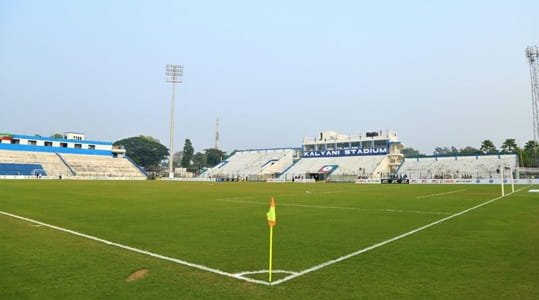
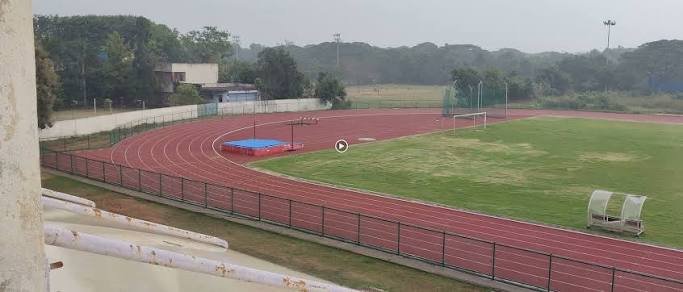
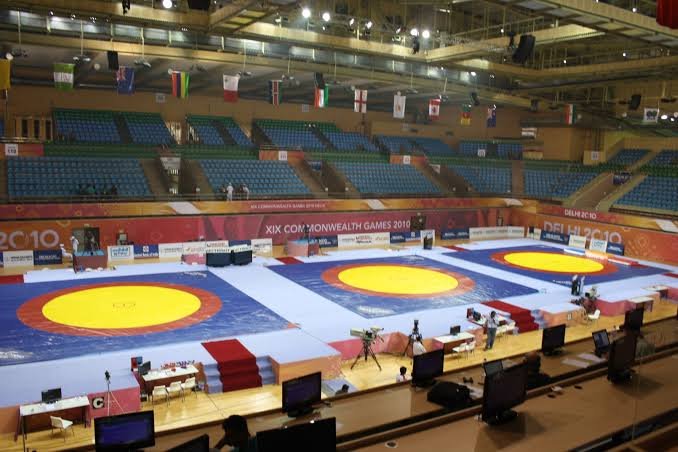
Chhatrasal Stadium New Delhi has produced six Olympic and world medal-winning wrestlers — Sushil Kumar, Yogeshwar Dutt, Bajrang Punia, Ravi Kumar Dahiya, Amit Kumar Dahiya, and Aman Sehrawat — a roster few sporting facilities anywhere in the world can match. Guided by Dronacharya awardee Mahabali Satpal, this North Delhi venue has quietly built one of India’s most productive wrestling pipelines while functioning as a genuinely multi-sport public facility.
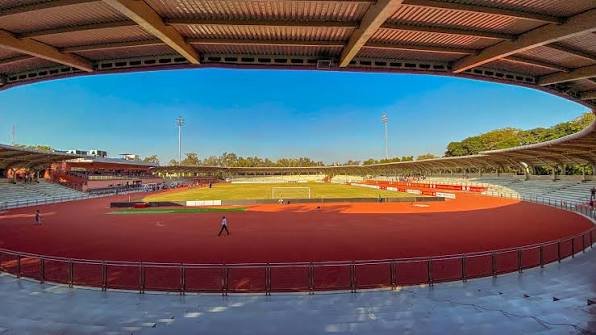
Key Details: Chhatrasal Stadium
| Detail | Information |
| Location | Model Town, North Delhi |
| Built | Early 1980s |
| Renovated | 2010, for the Commonwealth Games |
| Capacity | Approximately 16,000 |
| Surface | Grass |
| Entry gates | 13 |
| Guided by | Mahabali Satpal, Dronacharya awardee |
| Nearest metro | Model Town, Azadpur (both walking distance) |
| Famous alumni | Sushil Kumar, Yogeshwar Dutt, Bajrang Punia, Ravi Kumar Dahiya, Aman Sehrawat |
| Football tenants | Sudeva Delhi FC, Delhi FC |
Finding the Ground in North Delhi
Model Town, the North Delhi neighbourhood housing the stadium, offers something few major sports venues in the capital can claim — genuine walkable metro access from two separate stations. That accessibility has helped keep the ground firmly embedded in the daily routines of local athletes and residents alike, rather than functioning as an occasional-visit destination.
Reaching the venue is straightforward:
- Model Town and Azad Pur metro stations both sit within walking distance, giving visitors two separate route options depending on where they’re coming from.
- Thirteen entry gates spread access points around the stadium, easing congestion during larger events and training sessions.
- The stadium typically closes to the public on Sundays, since that’s when structured training sessions run through the morning and evening for resident athletes.
How Big Is Chhatrasal Stadium?
Most current sources agree on approximately 16,000 as the stadium’s seating capacity, a figure that’s held fairly consistent across recent reporting. It’s worth noting that a few older or less reliable listings cite dramatically larger numbers, upward of 60,000 — these appear to be errors, likely confusing Chhatrasal with Delhi’s much larger Jawaharlal Nehru Stadium, and shouldn’t be treated as accurate.
A few things worth understanding about its scale:
- At 16,000, the venue sits comfortably in the mid-range among Delhi’s major sporting facilities, considerably smaller than JLN Stadium but larger than several of the city’s dedicated indoor arenas.
- The stadium’s 2010 renovation ahead of the Commonwealth Games added a new, advanced athletics track without dramatically altering the original seating footprint.
- Competition and training facilities span roughly 14,344 square metres across a basement and two upper storeys, reflecting genuinely substantial indoor infrastructure alongside the outdoor field.
What’s Available Inside the Complex
Chhatrasal Stadium has grown well beyond its wrestling roots into a genuinely comprehensive sports facility.
- Dedicated wrestling halls and akhadas, the traditional training pits that have produced generations of India’s top grapplers
- A synthetic athletics track installed during the 2010 renovation, replacing the venue’s older running surface
- Indoor courts supporting basketball, kabaddi, and other team sports
- A modern gymnasium and fitness centre for athlete conditioning
- A swimming pool, adding aquatic training to the venue’s sporting range
- Hostel accommodation for athletes training at the facility long-term
- Medical and physiotherapy centres supporting injury recovery and athlete health
- Organised parking facilities for both visitors and officials
- CCTV surveillance and security checkpoints throughout the complex
- Cafeteria and nearby dining options for athletes, coaches, and visitors
The Wrestling Legacy That Built This Place
What genuinely sets Chhatrasal apart from most Indian sporting venues isn’t its capacity or its facility list — it’s the sheer concentration of elite wrestling talent that has trained here. Under Mahabali Satpal’s guidance, the stadium has become something close to a factory for Olympic and Commonwealth medals in wrestling, a track record very few training facilities anywhere can match. Sushil Kumar’s Olympic medals, Yogeshwar Dutt’s Commonwealth and Asian Games success, Bajrang Punia’s world championship performances, and more recently Ravi Kumar Dahiya and Aman Sehrawat’s Olympic achievements all trace back to training grounds within this North Delhi complex.
Football’s Growing Presence
Beyond wrestling, Chhatrasal has also become a genuine football venue in recent years, serving as home ground for both Sudeva Delhi FC and Delhi FC. This dual identity — legendary wrestling akhada by tradition, functioning multi-sport venue by modern use — reflects how the stadium has adapted since its Commonwealth Games renovation, expanding its relevance well beyond the sport that made it famous.
A Facility Built to Last
The 2010 Commonwealth Games renovation gave Chhatrasal genuinely international-standard infrastructure, and the investment has paid dividends well beyond the Games themselves. Rather than becoming a one-time event venue left to decline afterward, the stadium has remained continuously active as a training base, competition venue, and community sporting hub — exactly the kind of sustained utility that separates genuinely valuable sports infrastructure from facilities that fade once the spotlight moves elsewhere.
FAQs
Q1. Why is Chhatrasal Stadium so closely associated with wrestling?
Under coach Mahabali Satpal’s guidance, it has produced six Olympic and Commonwealth medal-winning wrestlers, including Sushil Kumar and Bajrang Punia, making it one of India’s most successful wrestling training grounds.
Q2. How do I reach Chhatrasal Stadium using Delhi Metro?
Both Model Town and Azad Pur metro stations are within walking distance of the venue, giving visitors two convenient route options depending on their starting point.
Q3. Is Chhatrasal Stadium open to the public every day?
The stadium typically closes on Sundays, when structured training sessions for resident athletes run through the morning and evening instead.
Q4. Which football clubs use Chhatrasal Stadium as their home ground?
Sudeva Delhi FC and Delhi FC both use the venue as their home ground, reflecting the stadium’s growing role beyond its traditional wrestling identity.