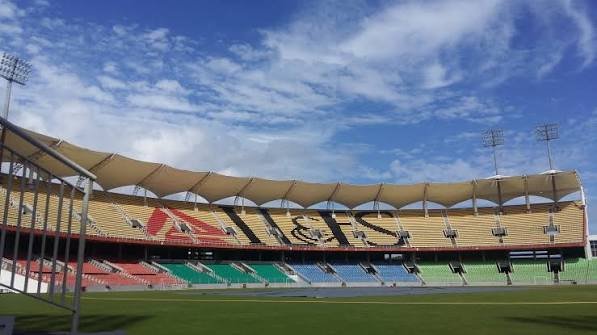
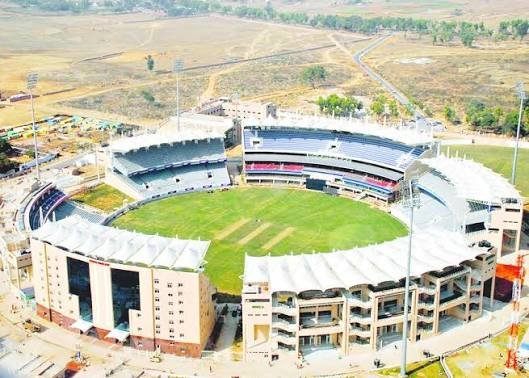
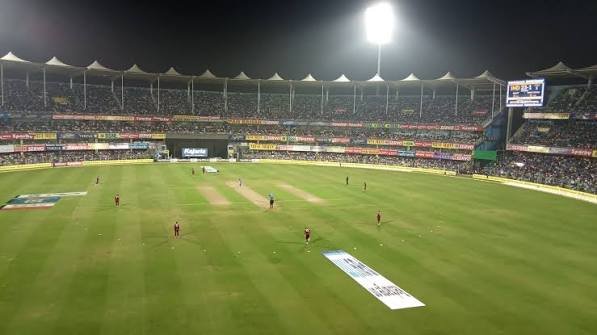
Central India waited a long time for a cricket venue that could hold its own against the giants of Mumbai, Kolkata, and Ahmedabad. Chhattisgarh got there in style. The Shaheed Veer Narayan Singh International Cricket Stadium in Nava Raipur isn’t just a big ground — it’s the third-largest cricket stadium in India and the fourth-largest anywhere in the world, a genuine architectural statement built by a state government determined to put its capital on cricket’s map. Here’s everything worth knowing about its location, scale, and facilities.
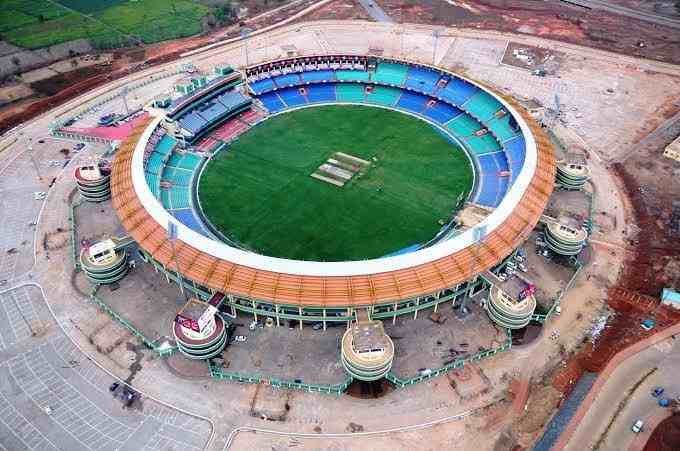
| Quick Facts | Details |
| Full name | Shaheed Veer Narayan Singh International Cricket Stadium |
| Also known as | Nava Raipur International Cricket Stadium |
| Location | Nava Raipur (Atal Nagar), Chhattisgarh |
| Distance from Raipur city | Approx. 20–21 km |
| Established | 2008 (inaugurated); built 2006–2008 |
| Seating capacity | 65,000 |
| Field size | 180 yards x 160 yards |
| Owner | Government of Chhattisgarh |
| Operator | Chhattisgarh State Cricket Sangh |
| Construction cost | Approx. ₹145 crore |
| First international match | 2023, ODI, India vs New Zealand |
| Named after | Veer Narayan Singh Binjhwar, 1857 revolt figure |
Where Is the Stadium Located?
The ground sits in Nava Raipur, also called Atal Nagar, Chhattisgarh’s purpose-built planned capital region, roughly 20 km from Raipur city itself. This wasn’t an accident of geography — Nava Raipur was designed as a modern administrative and business hub, and the stadium was positioned to anchor its growing sports infrastructure. The location gives it something few Indian venues can claim: genuine breathing room, with space around the stadium that older, city-centre grounds simply don’t have.
It sits close to Sendh Lake and near Swami Vivekananda Airport, which turns out to be one of its biggest practical advantages:
- By air: Swami Vivekananda Airport is close enough to the stadium that visiting teams and fans face minimal travel time between landing and match day.
- By road: Nava Raipur’s planned road network connects smoothly to Raipur city, making the roughly 20 km journey straightforward even during high-traffic match days.
- By rail: Raipur Junction, a major railway hub in central India, connects the wider region to national rail lines, with local transport covering the final stretch to the stadium.
How Many Spectators Can It Hold?
The stadium’s official capacity is generally cited at 65,000, making it one of the largest cricket grounds in the country and among the top handful worldwide by seating numbers. It’s worth noting that a few older sources list smaller figures (around 49,000), reflecting capacity before later renovations expanded and upgraded the stands — so if you come across differing numbers online, the 65,000 figure represents the stadium’s current, upgraded capacity.
A few numbers that put its scale in perspective:
- It ranks as the third-largest cricket stadium in India and the fourth-largest cricket ground in the world by capacity.
- The field itself measures 180 yards by 160 yards, with boundary ropes averaging around 80 metres and stretching up to a maximum of 84 metres for certain formats — genuinely enormous compared to most Indian grounds.
- It became India’s 50th international cricket venue only in 2023, despite being built back in 2008 — a long gap between construction and full international recognition.
Facilities Inside the Stadium
Given its scale and the government backing behind its construction, the stadium was built with a strong focus on both player and spectator experience from the outset.
For players and matches:
- A field large enough to challenge boundary-hitting batters, with some of the longest boundary dimensions of any Indian cricket ground
- Recognised by the BCCI as the Best Pitch and Best Ground in the Central Zone for the 2017-18 season, a strong indicator of how well the surface and outfield are maintained
- Strategically placed roofing designed to shield spectators from Chhattisgarh’s intense heat during day matches
For spectators:
- Covered stands offering protection from sun and rain across large sections of seating
- Upgraded, modern seating throughout the bowl
- Renovated media facilities supporting large-scale broadcast operations for international fixtures
For corporate and VIP guests:
- Dedicated corporate boxes, meticulously renovated as part of the stadium’s ongoing upgrades
- Facilities built to support the demands of top-tier international cricket, IPL matches, and major domestic tournaments alike
A Ground With a Meaningful Name
The stadium is named after Veer Narayan Singh Binjhwar, a significant figure in the 1857 revolt against British rule in the Chhattisgarh region. That naming choice matters — it ties a modern sporting landmark directly to the region’s freedom-struggle history, giving the venue a layer of cultural and historical identity that goes beyond its role as a cricket ground.
What Kind of Cricket Does It Host?
Since its first-ever match in 2010 — a practice fixture between Canada and a Chhattisgarh state team — the ground has grown steadily into a genuine international venue. It hosted its first official international match in January 2023, an ODI between India and New Zealand, and has since added T20Is and further ODIs to its résumé, including fixtures against South Africa. Beyond international cricket, it has also hosted IPL matches and celebrity cricket league fixtures, giving it a fairly broad mix of competitive and entertainment cricket on its calendar. The pitch here tends to assist bowlers, particularly in T20 cricket, with first-innings totals often settling below 200 — a genuinely different challenge from the high-scoring surfaces found at several other major Indian venues.
FAQs
Q1. Is Shaheed Veer Narayan Singh Stadium the same as Nava Raipur International Cricket Stadium?
Yes. Both names refer to the same venue — Shaheed Veer Narayan Singh International Cricket Stadium is the official name, while Nava Raipur International Cricket Stadium is a commonly used alternative based on its location.
Q2. Why did it take so long for the stadium to host international cricket after opening?
The stadium was inaugurated in 2008 and hosted domestic and practice matches for years, but it only received full international recognition in 2023, becoming India’s 50th international cricket venue at that point.
Q3. Is the pitch here good for batting or bowling?
It generally favours bowlers, especially in T20 cricket, with first-innings totals typically staying under 200 runs; batting first is usually considered slightly advantageous, though dew can help chasing teams in night matches.
Q4. How far is the stadium from Raipur city and its airport?
The stadium is located in Nava Raipur, roughly 20 km from Raipur city, and sits close to Swami Vivekananda Airport, making it relatively convenient for both local fans and travelling spectators.