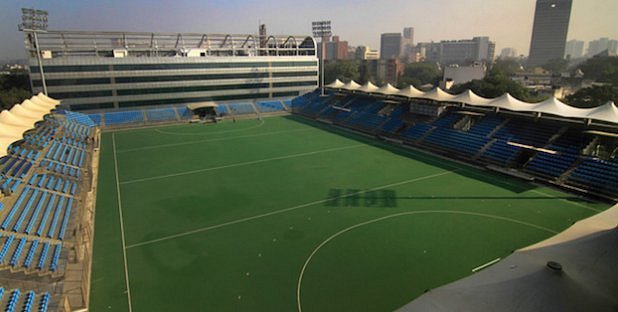
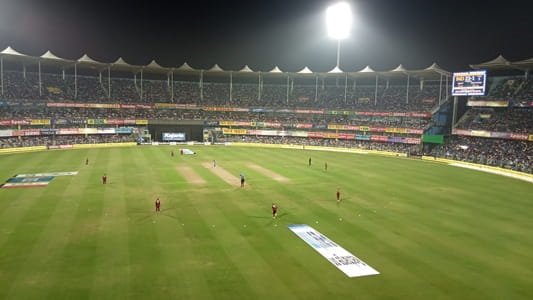
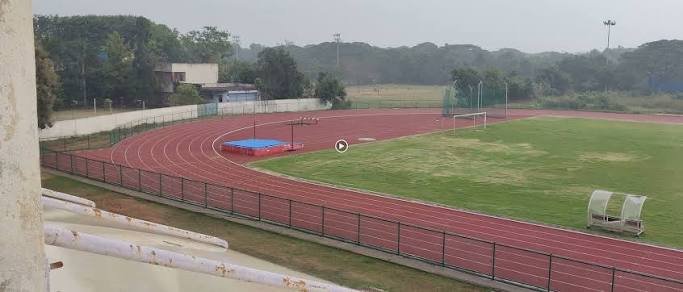
Barsapara Stadium Guwahati carries three names depending on who you ask — cricket boards call it the Assam Cricket Association Stadium, music fans might know it as Dr. Bhupen Hazarika Cricket Stadium, and locals simply say “Barsapara” after the neighbourhood it sits in. Whatever you call it, this ground transformed a former municipal dump yard into Northeast India’s largest sporting venue, and by late 2025 it had earned Test match status to go with its growing IPL profile.
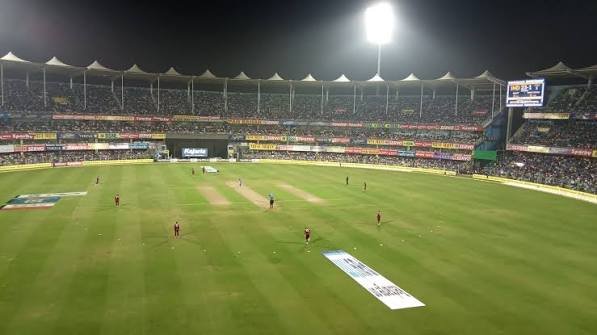
Barsapara Stadium Fast Facts
| Category | Details |
| Local name | Barsapara Stadium |
| Official name | Dr. Bhupen Hazarika Cricket Stadium |
| Governing body | Assam Cricket Association |
| Neighbourhood | Barsapara, Guwahati, Assam |
| Year opened | 2012 (construction started 2006) |
| Seating range | 40,000 to 46,000, extendable to 55,000 |
| National rank | 9th largest cricket stadium in India |
| IPL franchise | Rajasthan Royals (since 2023) |
| Debut international | T20I, India vs Australia, October 2017 |
Finding Your Way to the Ground
Guwahati’s cricketing hub sits in the Barsapara locality, an area that has transformed dramatically since construction began — from unused dump land into the anchor point of Assam’s sporting ambitions. That transformation continues shaping the neighbourhood even now, as commercial and residential growth around the stadium keeps accelerating.
Transport options for match-goers include:
- Guwahati’s airport, roughly 20-25 km out, remains the primary gateway for cricket fans flying in from other parts of India.
- The railway station sits closer, at 6-7 km, making it a genuinely practical option for domestic travellers.
- Local road transport — autos, cabs, city buses — handles the final stretch, though anyone heading to a big match should budget extra time given how congested the area has become on event days.
Sorting Out the Capacity Confusion
Ask three different sources how many people Barsapara Stadium holds, and you’ll likely get three different numbers. The spread runs from roughly 37,800 up to 46,000, with some listings mentioning an extended capacity of 55,000 for peak-demand events. None of these figures is necessarily wrong — they typically reflect different points in the stadium’s ongoing renovation timeline.
Worth noting about the ground’s standing:
- Nationally, it ranks 9th by seating capacity among Indian cricket stadiums, and there’s no competition for the top spot in the Northeast region.
- Match officials count eight pitches on the primary square, backed by a separate practice area with ten additional wickets.
- The venue’s international debut came against Australia in a T20I during October 2017, a match India ended up losing by eight wickets.
Infrastructure Built for Growth
Rather than resting on its original 2012 build, Assam Cricket Association has kept investing in the ground as its profile has risen through domestic and international cricket.
- Practice facilities include indoor nets, letting players train regardless of monsoon disruptions common to the region
- A dedicated gym supports conditioning work for both visiting and home teams
- East and West stand LED billboards, freshly installed for IPL 2026 broadcasts, upgrade the venue’s television presentation
- VIP hospitality lounges cater to premium ticket holders during high-profile fixtures
- A press and media centre handles broadcast logistics for internationally televised matches
- Floodlight systems enable full day-night scheduling across all three formats
Tracking the Stadium’s Cricket Journey
Barsapara’s path from provincial ground to Test venue happened in stages worth tracing. The opening match, held in November 2012, was a modest women’s interstate one-day fixture between Assam and the Odisha East Zone side. First-class cricket arrived during the 2013-14 Ranji season, with four matches including an Assam-Kerala clash.
Then came the international breakthrough — that 2017 T20I against Australia, followed by an ODI debut against West Indies in 2018. The stadium kept climbing the ladder steadily until November 2025, when it hosted its maiden Test match against South Africa, finally completing the set of all three international formats at a venue that started life hosting domestic women’s cricket barely thirteen years earlier.
Rajasthan Royals Call It Home
Since 2023, Rajasthan Royals has used Barsapara as a home venue in the IPL, a decision that gave Northeast India sustained access to franchise cricket’s flagship tournament. That relationship has continued into the 2026 season, with confirmed fixtures and fresh infrastructure spending — including those new LED boards — signalling the stadium’s growing importance within the league’s broader venue rotation.
Solving the Congestion Problem
Success has brought its own headaches. Rapid urban development around Barsapara has strained the area’s roads, parking, and general infrastructure during major matches — problems the Assam government isn’t ignoring. Construction is underway on a second international-grade venue across the river in Amingaon, North Guwahati. Ahluwalia Contracts is handling the ₹364 crore project, targeting a 20,000-seat capacity with completion expected around 2026, specifically designed with better urban planning to avoid repeating Barsapara’s growing pains.
Reading the Pitch
Batters generally have the upper hand at Barsapara, particularly in T20 cricket where totals commonly land between 160 and 180. Captains winning the toss lean toward bowling first more often than not, likely because dew becomes a factor during evening sessions and gives chasing sides a subtle edge over the course of an innings.
FAQs
Q1. What’s the difference between Barsapara Stadium and Dr. Bhupen Hazarika Cricket Stadium?
They’re the same venue. Dr. Bhupen Hazarika Cricket Stadium is the official name, while Barsapara Stadium is the commonly used local name based on its Guwahati neighbourhood.
Q2. Has this stadium always been able to host Test cricket?
No, Test status only arrived in November 2025 with a fixture against South Africa, years after the venue’s 2017 T20I debut and 2018 ODI debut.
Q3. Why is a new stadium being built in Guwahati when Barsapara already exists?
Rapid urbanisation around Barsapara created traffic and parking problems, so a second 20,000-seat venue is under construction in Amingaon to ease pressure and improve access.
Q4. Does batting or bowling dominate matches at Barsapara Stadium?
Batting generally holds the advantage, especially in T20 cricket with scores of 160-180 being typical, and teams often prefer bowling first due to evening dew assisting chasers.