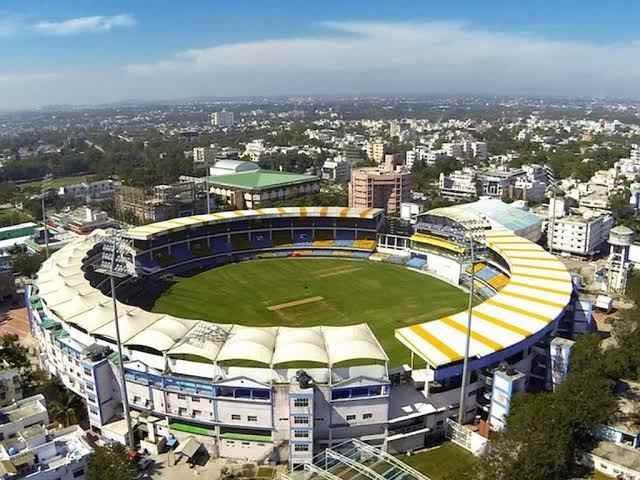
Ask any Indian cricket fan to name the ground where the 2011 World Cup dream ended in celebration, and the answer comes instantly: Wankhede Stadium. Standing along the Arabian Sea in South Mumbai, this ground has carried more emotional weight per square foot than almost any other venue in the country. It’s home to the Mumbai Indians, the Indian cricket team’s favourite Mumbai fixture, and a piece of the city’s identity that goes well beyond sport. Here’s a complete look at where it stands, how big it is, and what it offers today.
| Quick Facts | Details |
| Location | Churchgate, Mumbai, Maharashtra |
| Opened | 1974 |
| Seating capacity | 33,108 (post-2011 renovation) |
| Previous capacity | Over 40,000 (pre-2011) |
| Owner/Operator | Mumbai Cricket Association (MCA) |
| Ground area | Approx. 13.5 acres |
| Home teams | Mumbai Indians (IPL), Mumbai cricket team |
| Pitch surface | Red soil, known for bounce and swing |
| Famous for | 2011 ICC Cricket World Cup Final, Sachin Tendulkar’s farewell Test |
| Nearest station | Churchgate |
Where Is Wankhede Stadium Located?
The stadium sits in Churchgate, in South Mumbai, built on reclaimed land close to Marine Drive and the Arabian Sea coastline. It’s genuinely walkable from one of Mumbai’s busiest commercial districts, which is part of why the ground feels so woven into the city’s daily rhythm rather than tucked away on the outskirts like many newer stadiums.
Reaching it is about as convenient as Indian stadium access gets:
- By train: Churchgate railway station, the southern terminus of the Western Line, sits right next to the stadium — arguably the most convenient rail access of any major Indian cricket venue.
- By road: Marine Drive and the broader South Mumbai road network connect easily to the stadium, though traffic congestion is heavy on match days given the area’s density.
- By air: Chhatrapati Shivaji Maharaj International Airport is a moderate drive away, well-connected via Mumbai’s arterial roads.
How Many Spectators Can It Hold?
Wankhede’s current seating capacity stands at 33,108, a number that tells an interesting story on its own. Before its major 2011 World Cup renovation, the stadium could accommodate over 40,000 spectators. The redevelopment deliberately reduced that number — wider seats, better legroom, and improved sightlines were prioritised over raw capacity, a trade-off that reflects how spectator comfort has become a bigger priority for Indian stadiums than simply packing in more people.
A few things worth knowing about its current scale:
- Compared to giants like Ekana (50,000) or Narendra Modi Stadium (over 1 lakh), Wankhede is genuinely compact — a limitation created by its tight urban footprint hemmed in by railway lines and limited real estate.
- That capacity constraint has become enough of an issue that Maharashtra’s government has announced plans for a new 100,000-capacity stadium in Mumbai by 2030, specifically to host major finals the city currently can’t accommodate.
- Despite the smaller size, the bowl-shaped layout keeps fans close to the boundary ropes, creating one of the loudest, most compact matchday atmospheres in Indian cricket.
Facilities at the Stadium
The 2011 renovation didn’t just shrink the seating count — it modernised nearly every aspect of the spectator and player experience.
For spectators:
- A cantilevered fabric roof that replaced the old pillar structure, eliminating obstructed views that plagued the stadium for decades
- All-round visibility, meaning practically every seat now has a clear line of sight to the pitch
- Ergonomic seating with improved legroom compared to the pre-2011 layout
- Premium options including the MCA Club and corporate boxes for a more luxury matchday experience
Named stands and heritage touches:
- The Sachin Tendulkar Stand and Garware Pavilion, both offering central, shaded views
- Newer tributes added in 2026, including a stand honouring Rohit Sharma, Ajit Wadekar, and Sharad Pawar, plus the Ravi Shastri Stand
- Historic entry gates named after cricketing legends — Polly Umrigar and Vinoo Mankad gates have stood for years, with newer additions including gates for Dilip Sardesai, Diana Edulji, and Eknath Solkar
Practical amenities:
- Wide range of ticket tiers, from budget stands to premium corporate boxes
- Proximity to South Mumbai’s hotels, malls, and dining options, making a stadium visit easy to combine with sightseeing
- Modern player facilities befitting a venue that regularly hosts international Tests, ODIs, and IPL fixtures
What Makes the Pitch Distinctive?
Wankhede’s red soil pitch has built a reputation as one of India’s more balanced batting surfaces. It generally favours batters through the middle overs, but fast bowlers get real early assistance thanks to the surface’s natural bounce and swing — a combination that has produced some genuinely high-scoring, competitive matches over the decades. That balance, paired with short boundaries created by the compact ground design, is part of why Wankhede consistently delivers high-energy cricket regardless of format.
A Ground Layered With History
Few Indian stadiums carry as much cricketing memory as Wankhede. It opened in 1974 after a dispute between the Cricket Club of India and the Mumbai Cricket Association led to the construction of an entirely new venue — and it hosted its first Test just a year later, against West Indies. Since then, it has hosted Sachin Tendulkar’s emotional farewell Test, decades of IPL cricket as the Mumbai Indians’ home ground, and, most famously, India’s 2011 World Cup Final triumph over Sri Lanka. Every renovation since has tried to preserve that legacy while bringing the stadium’s infrastructure up to modern international standards.
FAQs
Q1. Why did Wankhede’s capacity go down after renovation instead of increasing?
The 2011 redevelopment prioritised spectator comfort — wider seats, better sightlines, and improved legroom — over maximum capacity, reducing the total from over 40,000 to about 33,108.
Q2. Which IPL team plays home matches at Wankhede Stadium?
Mumbai Indians use Wankhede as their home ground for IPL matches, alongside its role as a venue for Mumbai’s domestic team and the Indian national side.
Q3. Is Wankhede Stadium good for batting or bowling?
It’s generally considered batting-friendly overall, though the red soil pitch offers fast bowlers useful bounce and swing in the early overs, making the first hour of play genuinely competitive.
Q4. Will Mumbai get a bigger cricket stadium than Wankhede in the future?
Yes — Maharashtra’s government has announced plans for a new 100,000-capacity stadium in Mumbai, targeted for completion by 2030, specifically to address Wankhede’s space constraints for major finals and marquee events.