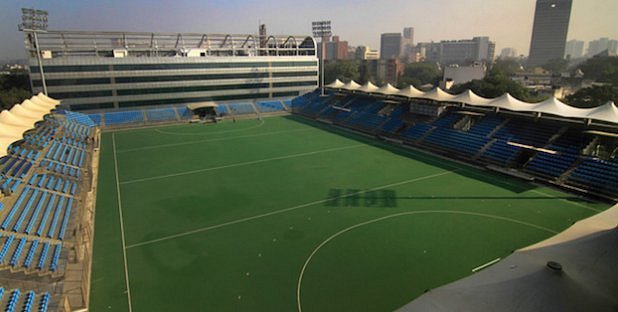
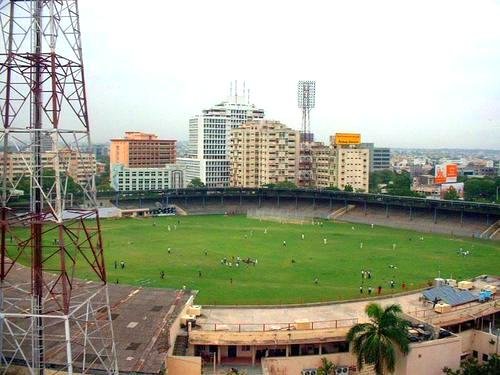
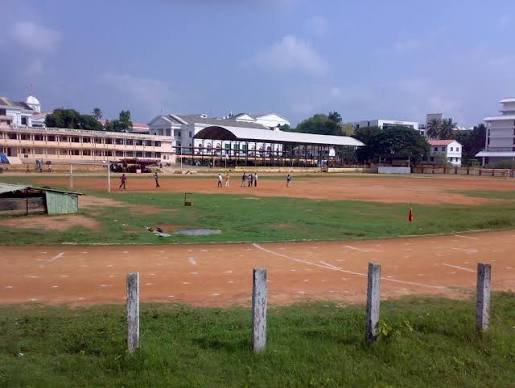
Jawaharlal Nehru Stadium in New Delhi has hosted an Asian Games opening ceremony, a Commonwealth Games closing ceremony, and Sting, Bruce Springsteen, and Tracy Chapman on the same night in 1988. Built in 1982 and named after India’s first Prime Minister, this stadium has spent over four decades reinventing itself — from athletics showcase to football headquarters to one of Delhi’s biggest concert venues. Here’s a complete breakdown of its location, scale, and facilities.
| Quick Facts | Details |
| Name | Jawaharlal Nehru Stadium |
| Location | Lodhi Road, New Delhi |
| Owner | Sports Authority of India |
| Opened | 1982, for the Asian Games |
| Seating capacity | 60,254 (up to 100,000 for concerts) |
| Renovated | 2010, for the Commonwealth Games |
| Renovation cost | ₹961 crore |
| Architect | Gerkan, Marg and Partners; Schlaich Bergermann Partner |
| Home team | Punjab FC (Indian Super League) |
| Also serves as | Headquarters, All India Football Federation |
| Field size | 106m x 68m |
Where Is Jawaharlal Nehru Stadium Located?
The stadium sits on Lodhi Road, right in the heart of New Delhi, placing it among the city’s most centrally located major sporting venues. Its proximity to landmarks like Lodhi Gardens gives the area a genuinely pleasant civic character, quite different from stadiums built on city outskirts purely for logistical convenience.
Reaching the venue is straightforward given its central Delhi position:
- By metro: The stadium has its own dedicated metro station, making it one of the most transit-accessible major venues in the capital.
- By road: Lodhi Road connects smoothly to Delhi’s broader arterial network, and the surrounding area offers ample parking for large events.
- Within the city: Being centrally located means autos, cabs, and buses all serve the stadium regularly, without requiring special transport planning.
How Many Spectators Can It Hold?
The stadium’s official all-seater capacity stands at 60,254, making it one of India’s largest sporting venues — the fourth-largest stadium in the country and among the largest in Asia by seating numbers. For major concerts and non-seated events, capacity has reportedly stretched to as much as 100,000.
A few things worth understanding about its scale:
- The stadium’s elliptical structure spans approximately 284 metres along its longest axis and 234 metres in width, giving it a genuinely massive physical footprint.
- Its bowl-shaped seating design ensures unobstructed sightlines from virtually every angle, a deliberate engineering choice carried through the 2010 renovation.
- Despite its enormous capacity, no single football team held long-term tenancy for years, with even the Indian national team splitting fixtures across multiple venues historically — a pattern that changed once Punjab FC and other ISL clubs began using it more consistently.
Facilities Inside the Stadium
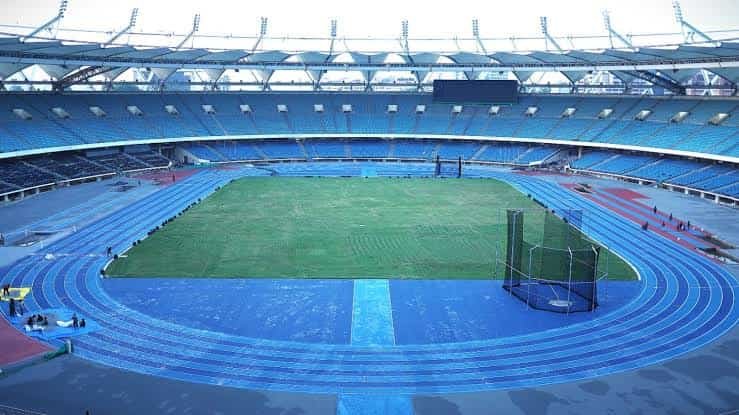
The 2010 Commonwealth Games renovation transformed Jawaharlal Nehru Stadium into a genuinely world-class multi-purpose venue, and its architectural ambition remains visible throughout.
Architectural highlights:
- A PTFE membrane roof shaped like a spoke wheel, stretching 71 metres and ranking among the largest membrane roof systems anywhere in the world
- A basket-shaped, self-supporting column structure around the perimeter, supporting the roof’s compression ring and evacuation access system
- A distinctive cantilever roof design that was architecturally unique at the time of the stadium’s original 1982 construction
For athletes and competition:
- An Olympic-grade synthetic athletics track meeting international competition standards
- International-standard changing rooms built to support elite football and athletics events
- A dedicated VIP area and press or media room for major tournament coverage
For spectators and accessibility:
- Disability-friendly infrastructure, including ramps, elevators, and dedicated accessible seating areas
- Electronic scoreboards and modern audiovisual systems throughout the venue
- Ample parking facilities designed to handle large event-day crowds
Sustainability features:
- Rainwater harvesting systems integrated into the stadium’s infrastructure
- Solar panels contributing to the venue’s environmentally conscious design approach
A Venue Built for Constant Reinvention
What makes Jawaharlal Nehru Stadium genuinely distinctive among Indian sporting venues is how thoroughly it has reinvented its purpose over the decades. Originally built to anchor India’s hosting of the 1982 Asian Games, it later became the centrepiece of the 2010 Commonwealth Games, hosting all track and field competitions alongside the opening and closing ceremonies. Between these two Games-era peaks, it functioned as a football venue, occasional cricket ground, and major concert destination — hosting international acts as early as 1988, when Amnesty International’s human rights tour brought global music stars to the Delhi stage.
Why Doesn’t the Stadium Host Cricket Anymore?
This is worth clarifying directly, since the stadium did host cricket historically. It staged two One Day Internationals, in 1984 and 1991, featuring notable performances from players like Ravi Shastri and Kepler Wessels. However, the venue no longer hosts international cricket due to current ICC regulations regarding stadium specifications and dedicated cricket infrastructure. Today, its primary sporting identity centres on football and athletics rather than cricket.
Football’s Growing Role at the Stadium
Jawaharlal Nehru Stadium currently serves as the headquarters of the All India Football Federation, cementing its status as one of Indian football’s most important venues. It has hosted the India national football team’s fixtures over the years and now serves as a home ground for Punjab FC in the Indian Super League. This growing football identity, paired with its athletics heritage, positions the stadium as a genuine dual-purpose hub for two of India’s most actively developing sporting disciplines.
FAQs
Q1. Why doesn’t Jawaharlal Nehru Stadium host international cricket anymore?
Current ICC regulations regarding dedicated cricket infrastructure mean the stadium, despite hosting ODIs in 1984 and 1991, no longer qualifies for international cricket matches today.
Q2. Which football club uses Jawaharlal Nehru Stadium as its home ground?
Punjab FC, an Indian Super League team, uses the stadium as one of its home venues, alongside its role as All India Football Federation headquarters.
Q3. How do I reach Jawaharlal Nehru Stadium in Delhi?
The stadium has its own dedicated metro station, making it one of the most transit-accessible major venues in New Delhi, alongside strong road connectivity via Lodhi Road.
Q4. What is the stadium’s maximum capacity for concerts versus sporting events?
Its standard all-seater sporting capacity is 60,254, though non-seated configurations for major concerts have reportedly accommodated up to 100,000 attendees.