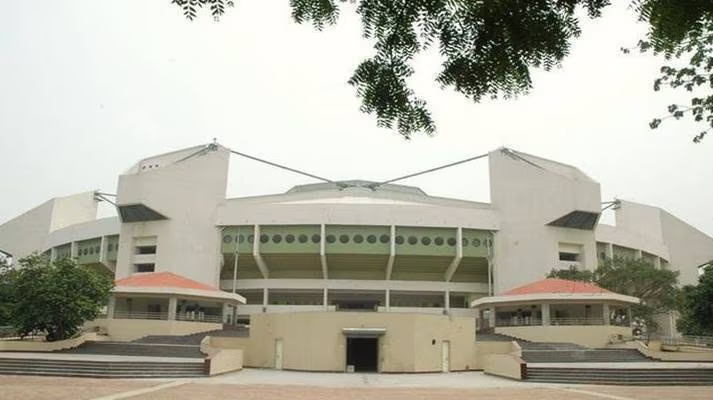
I S Bindra Punjab Cricket Association Stadium Mohali was, in 1992, nothing more than a swamp riddled with deep ravines on the outskirts of Chandigarh. Within two years, that unlikely site had transformed into what critics genuinely called India’s best cricket ground — a venue that would go on to host the emotionally charged 2011 World Cup semi-final between India and Pakistan, one of the most watched cricket matches in history.
| Detail | Information |
| Location | Sector 63, SAS Nagar, Mohali, Punjab |
| Established | 1993 |
| Renamed | 2015, after Inderjit Singh Bindra |
| Architect | Arun Loomba and Associates |
| Owner | Punjab Cricket Association (PCA) |
| Seating capacity | 26,000-26,950 (sources vary) |
| Ends | Yuvraj Singh End, Harbhajan Singh End |
| Home team | Punjab cricket team (domestic) |
| Former IPL tenant | Punjab Kings (2008-2023) |
| Notable match | 2011 World Cup semi-final, India vs Pakistan |
Locating the Stadium in SAS Nagar
The ground sits in Sector 63 of SAS Nagar, Mohali’s formal name, on the immediate outskirts of Chandigarh. That proximity to India’s meticulously planned Union Territory capital gives the stadium a genuinely well-organised surrounding infrastructure, a stark contrast to the swampland it was built on barely three decades ago.
Reaching the venue works well given its established regional connectivity:
- Chandigarh’s proximity means the stadium benefits from the broader region’s excellent road and air connectivity, serving visitors from across North India.
- SAS Nagar’s planned urban layout keeps parking, access roads, and local transport genuinely well-organised around the venue.
- Advance ticket booking is strongly recommended for major fixtures, with online platforms like Paytm offering the most reliable purchase route given how quickly house-full status hits during marquee matches.
Getting the Capacity Numbers Straight
Most sources converge on a capacity somewhere between 26,000 and 26,950, with Wikipedia’s official figure at 26,950 and several tourism platforms rounding to a simpler 26,000. This is a relatively tight range by Indian stadium standards, suggesting the figure has stayed fairly stable since the ground’s original construction.
A few things worth understanding about its scale and standing:
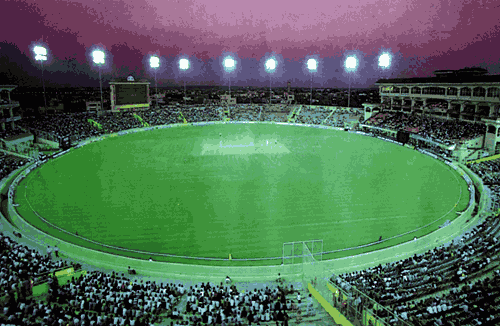
- The stadium’s architectural design allows uninterrupted views of the action from virtually any seat in the stands, a genuinely deliberate engineering choice from its original 1993 construction.
- Despite its comparatively modest capacity next to India’s largest venues, Mohali has hosted some of cricket’s most historically significant fixtures, including two separate World Cup semi-finals.
- The Punjab cricket team’s official capacity listing across its four home grounds cites a slightly different 28,000 figure, reflecting minor variance in how different organisations report the number.
What the Stadium Currently Offers
Beyond its cricketing pedigree, I S Bindra Stadium has built out genuinely comprehensive infrastructure over three decades of continuous operation.
- Sporting wickets and a lush green outfield consistently praised since the ground’s earliest years
- Spacious dressing rooms and excellent practice facilities supporting elite-level training
- A state-of-the-art gymnasium available to players training at the venue
- VIP lounges, food courts, and wheelchair-accessible seating for spectators
- A swimming pool and tennis courts within the broader stadium complex, extending its function beyond cricket alone
- High-quality drainage systems specifically engineered to minimise rain-delay disruptions during matches
- A well-equipped clubhouse and restaurant, frequently praised by visitors for both food quality and overall ambience
From Swamp to World-Class Venue
The stadium’s origin story remains one of Indian cricket infrastructure’s most dramatic transformations. Before 1992, the site was a swamp cut through with deep ravines — hardly promising ground for what would become a Test venue. Punjab Cricket Association’s decision to build here, and the speed with which they delivered a genuinely world-class facility within roughly two years, established Mohali’s reputation almost immediately. The association subsequently relocated its own headquarters into the stadium complex, cementing the ground’s role as the administrative heart of Punjab cricket alongside its function as a playing venue.
A Pitch That Changed Its Own Character
Mohali’s playing surface has genuinely evolved over its history in a way few Indian pitches have. In its earlier years, the pitch carried a reputation as the liveliest in the country — India were famously bowled out for just 83 on the first morning against New Zealand in 1999, a collapse that became part of the ground’s early identity. Over subsequent years, however, the surface changed character considerably, turning into a flatter, more batting-friendly pitch that has produced high-scoring contests and drawn Test matches rather than the seam-heavy carnage of its debut decade.
Two World Cup Semi-Finals and a New Rival Down the Road
Mohali’s biggest cricketing moments have consistently arrived on the sport’s biggest stage. The 1996 World Cup semi-final here saw Australia squeeze past West Indies in a genuinely nail-biting finish, and the ground repeated that feat in 2011, hosting the emotionally charged India-Pakistan semi-final that remains one of the most-watched cricket broadcasts ever. Rohit Sharma’s 208* also stands among the ground’s legendary individual performances.
The stadium’s role shifted meaningfully in 2023, when Punjab Kings relocated their IPL home to the newer Maharaja Yadavindra Singh International Cricket Stadium in nearby Mullanpur, a 38,000-capacity venue that opened in 2021. That move hasn’t diminished I S Bindra Stadium’s importance to Punjab cricket — it remains the primary home ground for Punjab’s domestic team, working alongside Mullanpur rather than being replaced by it.
FAQs
Q1. Why did Punjab Kings move away from I S Bindra Stadium?
The franchise relocated its IPL home to the newer, larger Maharaja Yadavindra Singh International Cricket Stadium in Mullanpur starting in 2024, though I S Bindra Stadium remains Punjab’s primary domestic cricket venue.
Q2. Why is this venue also called Mohali Stadium?
It’s commonly known as Mohali Stadium after its location in SAS Nagar, Mohali, though it was officially renamed I S Bindra Stadium in 2015 to honour former PCA president Inderjit Singh Bindra.
Q3. How has the pitch at Mohali changed since the stadium opened?
It started as one of India’s liveliest, seam-friendly surfaces in the 1990s but gradually flattened over the years into a more batting-friendly pitch producing higher-scoring matches.
Q4. What non-cricket facilities are available at I S Bindra Stadium?
The complex includes a swimming pool, tennis courts, a gymnasium, and a well-regarded clubhouse restaurant, extending its use beyond cricket for members and visitors.