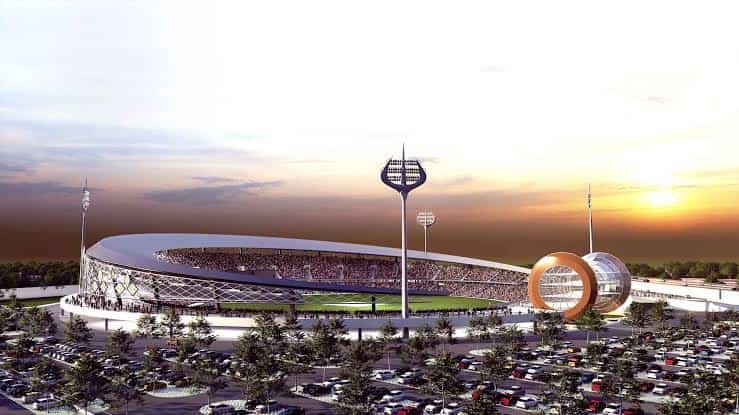
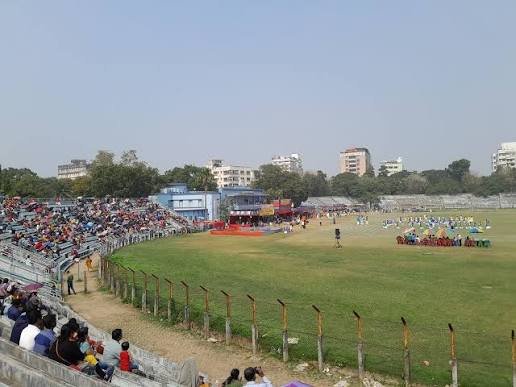
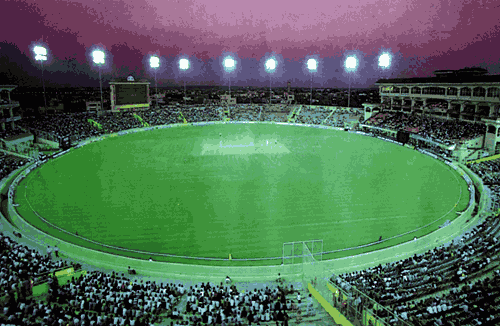
Holkar Stadium Indore layout carries a genuinely unusual quirk for a modern international venue — its square boundaries measure just 56 metres, considerably shorter than most Test-standard grounds in India. That compact design didn’t stop Virender Sehwag from carving out the third-highest ODI score in history here, an unbeaten 219 against West Indies in 2011 that remains one of the ground’s defining moments since Madhya Pradesh Cricket Association renamed it after Indore’s ruling Holkar dynasty in 2010.
| Detail | Information |
| Former name | Maharani Usharaje Trust Cricket Ground |
| Renamed | 2010, after the Holkar Maratha dynasty |
| Location | Race Course Road, Indore, Madhya Pradesh |
| Built | 2003 (originally established 1934) |
| Owner/Operator | Madhya Pradesh Cricket Association (MPCA) |
| Seating capacity | 25,000-30,000 (sources vary) |
| Home team | Madhya Pradesh cricket team |
| Square boundary length | 56 metres |
| First Test | October 2016, India vs New Zealand |
| Notable record | Virender Sehwag’s 219, third-highest ODI score ever |
Layout and Location Within Indore
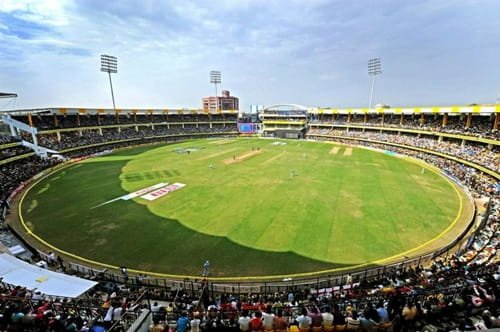
The ground occupies a genuinely central position on Race Course Road, near Janjerwala Square in Old Palasia, placing it firmly within Indore’s established commercial and civic core. Its layout design keeps the field notably compact by international standards — those 56-metre square boundaries are considerably shorter than what most Test-hosting grounds offer, a characteristic that directly shapes how matches unfold here.
Reaching the stadium works well given its central Indore address:
- The venue sits within easy reach of Indore’s main commercial district, keeping it accessible without requiring extensive travel from most parts of the city.
- Local cabs, autos, and rental car services all serve the Race Course Road area regularly, given its established central location.
- The stadium remains open 24 hours with no entry fee for casual visitors outside match days, making it genuinely easy to view even without attending a fixture.
Working Out the Real Seating Capacity
Capacity figures for Holkar Stadium bounce between 25,000 and 30,000 depending on the source, with Wikipedia’s official listing citing 30,000 as the standard reference. Tripadvisor reviews mention figures as low as “more than 25,000,” while most tourism-focused sources converge on the 30,000 mark.
A few things worth understanding about its scale and layout:
- Despite its relatively compact seating compared to India’s largest venues, Holkar Stadium has hosted a genuinely substantial international schedule since becoming a Test venue in 2016.
- The ground’s limited capacity compared to giants like Narendra Modi Stadium is often framed as a strength rather than a weakness — reviewers consistently describe an intense, energetic matchday atmosphere that larger, more spread-out venues can’t replicate.
- Nearby Nehru Stadium, Indore’s older cricket venue with 26,000 capacity, was Indore’s primary international ground until March 2001, when Holkar Stadium took over that role entirely.
The Layout’s Distinctive Features
Beyond capacity numbers, Holkar Stadium’s internal layout has been deliberately built around celebrating cricket’s legends, giving the venue genuine character.
- Every major structural element — the pavilion, dressing rooms, stands, stadium gate, and commentator box — is named after a legendary figure from cricket history
- Floodlights supporting day-night match scheduling across all formats
- One of India’s best drainage systems, minimising rain-related disruption during matches
- An air-conditioned commentary box and media facilities equipped for modern broadcast standards
- A well-regarded convention centre attached to the stadium complex, praised for its equipment, food quality, and staff service
- Ongoing infrastructure upgrades including improved seating and new technology installations in recent years
A Ground With Genuine Maratha Heritage
The stadium’s naming pays tribute to the Holkar dynasty of the Marathas, who ruled Indore for generations. The ground itself traces its origins back to 1934, when it was established at the behest of the late Maharaja Sir Tukoji Rao III Holkar — meaning the venue’s connection to Indore’s royal history predates its modern cricketing prominence by decades. That 2010 renaming from Maharani Usharaje Trust Cricket Ground to Holkar Stadium formalised a link between the city’s Maratha heritage and its most significant modern sporting venue.
From Domestic Ground to Test Venue
Holkar Stadium’s rise through Indian cricket’s hierarchy happened in clear stages. It hosted its first ODI in April 2006, an India-England fixture, before gradually building enough credibility to be selected as one of six new Test venues in India. That recognition arrived on 8 October 2016, when the ground hosted India against New Zealand for the third and final Test of that series, becoming India’s twenty-second Test venue at the time. Since then, it has continued hosting a steady stream of international fixtures, including its most recent men’s Test against Australia in March 2023, and an ODI against New Zealand as recently as January 2026.
A Compact Ground With Batting Advantages
The stadium’s genuinely short square boundaries at 56 metres directly favour aggressive batting, and Sehwag’s record-breaking 219 against West Indies stands as the clearest evidence of what’s possible on this surface. India has maintained a perfect record across the four ODIs played here as of recent counts, a statistic locally regarded as making Holkar Stadium something of a lucky ground for the national team. That combination of favourable dimensions and India’s strong home record has helped cement the venue’s reputation among fans as a genuinely exciting, high-scoring destination for limited-overs cricket.
FAQs
Q1. Why does Holkar Stadium’s capacity figure vary between 25,000 and 30,000?
Different sources cite varying figures, with Wikipedia’s official listing at 30,000 being the most commonly referenced number across tourism and cricket information platforms.
Q2. What makes Holkar Stadium’s layout different from other Indian Test venues?
Its square boundaries measure just 56 metres, notably shorter than most international grounds, making it more batting-friendly and contributing to its energetic matchday atmosphere.
Q3. Which stadium did Holkar Stadium replace as Indore’s main international venue?
Nehru Stadium served as Indore’s primary cricket venue until March 2001, after which Holkar Stadium took over hosting all international and major domestic matches.
Q4. Is entry to Holkar Stadium free outside of match days?
Yes, the stadium remains open 24 hours with no entry fee for casual visitors when matches aren’t scheduled, making it accessible for sightseeing anytime.