Brabourne Stadium Mumbai carries a founding story that sounds almost too dramatic to be real — Governor Lord Brabourne was offered a choice between cash for his government or “immortality” for himself, and he chose immortality. That deal, struck by CCI visionary Neville de Mello, gave India its first-ever permanent cricket stadium. Frank Worrell once said it was the only ground in the world where he could watch cricket in his dressing gown, only removing it when his turn came to bat — a small detail that captures just how exclusive and storied this Churchgate venue has always been.
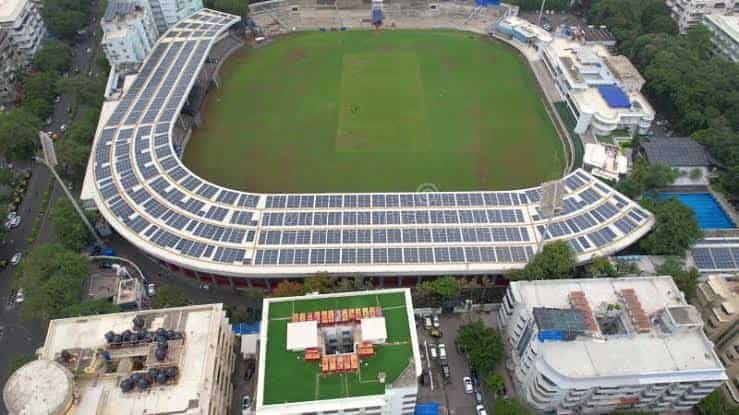
Brabourne Stadium Ground Facts
| Detail | Information |
| Location | Churchgate, Mumbai, Maharashtra |
| Owner | Cricket Club of India (CCI) |
| Foundation stone laid | 22 May 1936, by Lord Brabourne |
| Officially opened | 7 December 1937 |
| Designed by | Neville de Mello (concept); Gregson, Batley and King (architects) |
| Built by | Shapoorji Pallonji & Co. |
| Seating capacity | 20,000–50,000 (sources vary significantly) |
| Ends | Pavilion End, Church Gate End |
| Home teams | Mumbai cricket team (men’s & women’s), Cricket Club of India |
| Historical status | India’s first permanent cricket stadium |
A Ground Reclaimed From the Sea
Brabourne Stadium sits in Churchgate, on land reclaimed through Mumbai’s Backbay reclamation scheme — a genuinely fitting origin for a venue that was, quite literally, wrestled out of the Arabian Sea. The Cricket Club of India acquired 90,000 square yards of this reclaimed land at ₹13.50 per square yard, giving the ground its prime central Mumbai location near Marine Drive.
Reaching the stadium is about as convenient as Indian cricket venues get:
- Churchgate railway station, the terminus of the Western Line, sits essentially adjacent to the stadium, making it one of the most walkable cricket grounds in the country.
- Marine Drive’s proximity adds genuine scenic value, with visitors often combining a match with a stroll along Mumbai’s iconic seafront promenade.
- The area’s density of hotels, including The Oberoi and Trident, plus malls like High Street Phoenix, makes it easy to build an entire day around a visit here.
Untangling the Capacity Confusion
Ask around about Brabourne’s capacity and you’ll get wildly different answers — some sources cite 20,000, others confidently state 50,000. This isn’t simple sloppy reporting; the discrepancy likely stems from the difference between the stadium’s original grand design intent and its current operational seating configuration.
A few things worth knowing about these numbers:
- The original 1936 construction brief called for covered accommodation for 35,000 spectators, alongside pavilions, tennis courts, and a swimming pool — an ambitious blueprint for its era.
- Most current ticketing and match-day sources settle on 20,000 as the practical, in-use capacity today, which is the figure most relevant for anyone actually planning to attend a match.
- Despite official capacity limits, historical accounts note the ground was often “crammed in beyond capacity” during its peak decades, with one 2022 women’s T20I reportedly drawing over 40,000 spectators through free entry.
Inside One of India’s Most Storied Grounds
Despite its age, Brabourne hasn’t been left behind by modern cricket infrastructure demands.
- A clubhouse, tennis courts, and swimming pool remain part of the broader CCI complex surrounding the playing field
- The pavilion features dark wood interiors decorated with portraits of legendary cricketers and images from historic matches, alongside marble flooring
- Three main stands — North, West, and East — structure the spectator experience around the ground
- Seating options range from budget general stands to premium VIP and corporate boxes, with ticket prices spanning ₹500 to over ₹10,000 depending on category
- The pitch offers a balanced mix for batters and bowlers, though it’s proven especially high-scoring in T20 cricket thanks to consistent bounce and short boundaries
From Test Cricket’s Home to a Modern Legacy Venue
Brabourne’s Test history runs from December 1948, when India hosted West Indies in the ground’s inaugural Test, through to 1972, when regular Test cricket at the venue effectively ended. That shift traces back to a genuinely consequential dispute in the 1970s over ticket allocation between CCI and the Bombay Cricket Association — a disagreement significant enough that BCA built an entirely new stadium, Wankhede, just a few hundred metres north rather than continue negotiating with CCI. The North Stand at Brabourne had even housed BCCI’s headquarters and the 1983 World Cup trophy until both relocated to Wankhede’s Cricket Centre in 2006.
Brabourne Today: Domestic Cricket and Marquee Finals
While Wankhede Stadium now handles Mumbai’s IPL fixtures, including for franchises like Mumbai Indians, Brabourne has carved out its own modern identity. It continues hosting domestic Mumbai cricket, women’s matches, age-group tournaments, and club-level fixtures throughout the year. Notably, it’s also become a key venue for the Women’s Premier League, scheduled to host both the Eliminator and Final of WPL 2026 in March that year — proof that this nearly nine-decade-old ground still commands genuinely prestigious fixtures despite Wankhede’s larger modern profile.
FAQs
Q1. Why does Brabourne Stadium’s capacity vary so much between sources?
The original 1936 design planned for 35,000 covered seats, but current match-day operational capacity is generally cited at 20,000, causing the discrepancy across different references.
Q2. Why did Brabourne Stadium stop hosting regular Test matches?
A 1970s ticket allocation dispute between CCI and the Bombay Cricket Association led BCA to build Wankhede Stadium nearby, which took over as Mumbai’s primary international venue.
Q3. Does Brabourne Stadium host IPL matches in 2026?
No, Mumbai’s IPL home fixtures are held at Wankhede Stadium; Brabourne focuses on domestic cricket and hosted the WPL 2026 Eliminator and Final instead.
Q4. How do I reach Brabourne Stadium using public transport?
Churchgate railway station, the Western Line’s terminus, sits directly adjacent to the stadium, making it one of Mumbai’s most easily accessible cricket venues.