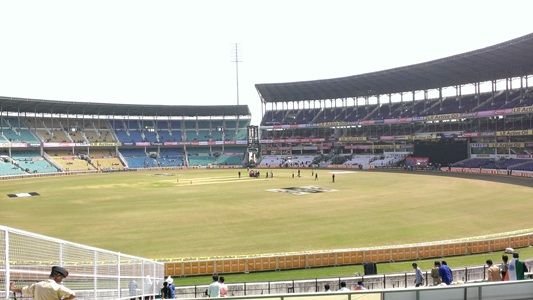
Nagpur doesn’t get talked about as much as Mumbai or Kolkata when the conversation turns to Indian cricket’s biggest venues, but the Vidarbha Cricket Association Stadium quietly holds its own against any of them. Located in Jamtha on the city’s outskirts, VCA Stadium has hosted everything from a Sachin Tendulkar century to a full-fledged Test between India and Australia, and it remains one of the busiest T20I venues in the country. For anyone tracking India’s major cricket grounds, here’s a complete rundown of what makes this stadium tick.
| Quick Facts | Details |
| Full name | Vidarbha Cricket Association Stadium |
| Commonly known as | VCA Stadium |
| Location | Jamtha, Wardha Road, Nagpur, Maharashtra |
| Established | 2008 |
| Seating capacity | 45,000 |
| Ground area | Approx. 33 acres |
| Owner/Operator | Vidarbha Cricket Association |
| Home teams | Vidarbha (Ranji Trophy), Central Zone (Duleep Trophy) |
| First Test | November 2008, India vs Australia |
| Notable feature | Hosted more T20Is than any other Indian venue as of early 2020 |
Where Is VCA Stadium Located?
The stadium sits in Jamtha, a locality on the southwestern edge of Nagpur along Wardha Road, away from the congestion of the city centre. This positioning was deliberate — Vidarbha Cricket Association wanted a large, self-contained venue rather than squeezing a modern stadium into an already crowded urban plot, and Jamtha gave them the space to build exactly that.
Getting there is fairly manageable given Nagpur’s role as a central Indian transport hub:
- By metro: Khapri Metro station is around 6 km away, making it one of the more convenient big-city stadiums to reach on match day.
- By rail: Nagpur Junction, roughly 15 km out, connects the city to virtually every major Indian rail route, since Nagpur sits near the geographic centre of the country.
- By road: Wardha Road links directly to the stadium, and dedicated parking is available for those driving in.
How Many Spectators Can It Hold?
VCA Stadium seats 45,000 people, placing it firmly among India’s largest cricket grounds and giving it the second-largest field area of any stadium in the country. That scale matters on match day — when India plays a marquee fixture here, the atmosphere rivals venues twice as famous in cricketing folklore.
A few numbers that put its scale in context:
- Six Test matches, nine ODIs, and twelve T20Is played here as of late 2019 — a genuinely high match count for a venue outside the traditional “big five” Indian cities.
- As of January 2020, it had hosted more T20Is than any other stadium in India, a record that speaks to how frequently BCCI turns to Nagpur for limited-overs cricket.
- The ground spans roughly 33 acres, giving it room for a full range of practice facilities alongside the main arena.
Facilities Inside the Stadium
VCA Stadium was designed with a modern, sustainability-conscious approach that was fairly ahead of its time when it opened in 2008.
For players and officials:
- Multiple practice pitches and dedicated training areas
- Player pavilions positioned at both ends of the ground
- Facilities built to full international match standards, supporting Test, ODI, and T20I cricket
For spectators:
- Cafeterias and food courts spread across the stadium complex
- VIP boxes for corporate and high-profile guests
- Advanced floodlight systems supporting day-night matches
Sustainability features:
- Solar panel installations, an unusual and forward-thinking addition for an Indian stadium built in the mid-2000s
- Eco-friendly systems integrated into the stadium’s broader infrastructure, reducing its dependence on conventional power for day-to-day operations
What Makes the Pitch Distinctive?
The VCA pitch has built a reputation for offering something to everyone across the course of a match. Fast bowlers typically get bounce and seam movement in the opening exchanges, especially in Test cricket, where conditions on the first two days have historically troubled batting line-ups. As the match wears on, the surface tends to dry out and crack, handing the advantage over to spinners in the middle and later stages.
In white-ball cricket, the story shifts slightly — the pitch tends to reward early batting before conditions become tougher, which is part of why totals here have occasionally climbed past 350 in ODIs. That balance between pace, bounce, and turn is exactly why VCA remains a venue teams and broadcasters keep coming back to, despite Nagpur not carrying the same historical weight as India’s older Test centres.
Matches and Milestones
Since opening in 2008, VCA Stadium has built a genuinely rich cricketing history. Its very first Test, played that same year between India and Australia, set the tone — the venue immediately proved it could handle top-tier international cricket. It has gone on to host India’s men’s and women’s teams across formats, plus IPL fixtures, though its IPL history remains relatively limited compared to its international workload. For domestic cricket, it’s the home ground for both Vidarbha in the Ranji Trophy and Central Zone in the Duleep Trophy, keeping the stadium active well beyond the international season.
FAQs
Q1. Is VCA Stadium the same as Vidarbha Cricket Association Stadium?
Yes. VCA Stadium is simply the commonly used short form for the Vidarbha Cricket Association Stadium in Jamtha, Nagpur.
Q2. Does VCA Stadium favour batters or bowlers?
It offers a fairly balanced contest — seamers get early assistance, especially in Tests, while spinners take over as the pitch wears down later in the match; white-ball formats tend to favour batting in the first innings.
Q3. How do I reach VCA Stadium from Nagpur city centre?
The stadium is accessible via Khapri Metro station (about 6 km away) or by road along Wardha Road; Nagpur Junction railway station is roughly 15 km from the venue.
Q4. Which domestic teams play their home matches at VCA Stadium?
Vidarbha’s team uses it as their Ranji Trophy home ground, while Central Zone plays its Duleep Trophy matches here as well.